32Classic MS Mix Strip
The 32Classic MS is a high-performance all-analog channel strip that brings the signature Harrison sound and processing tools from our flagship…
FIND OUT MORE

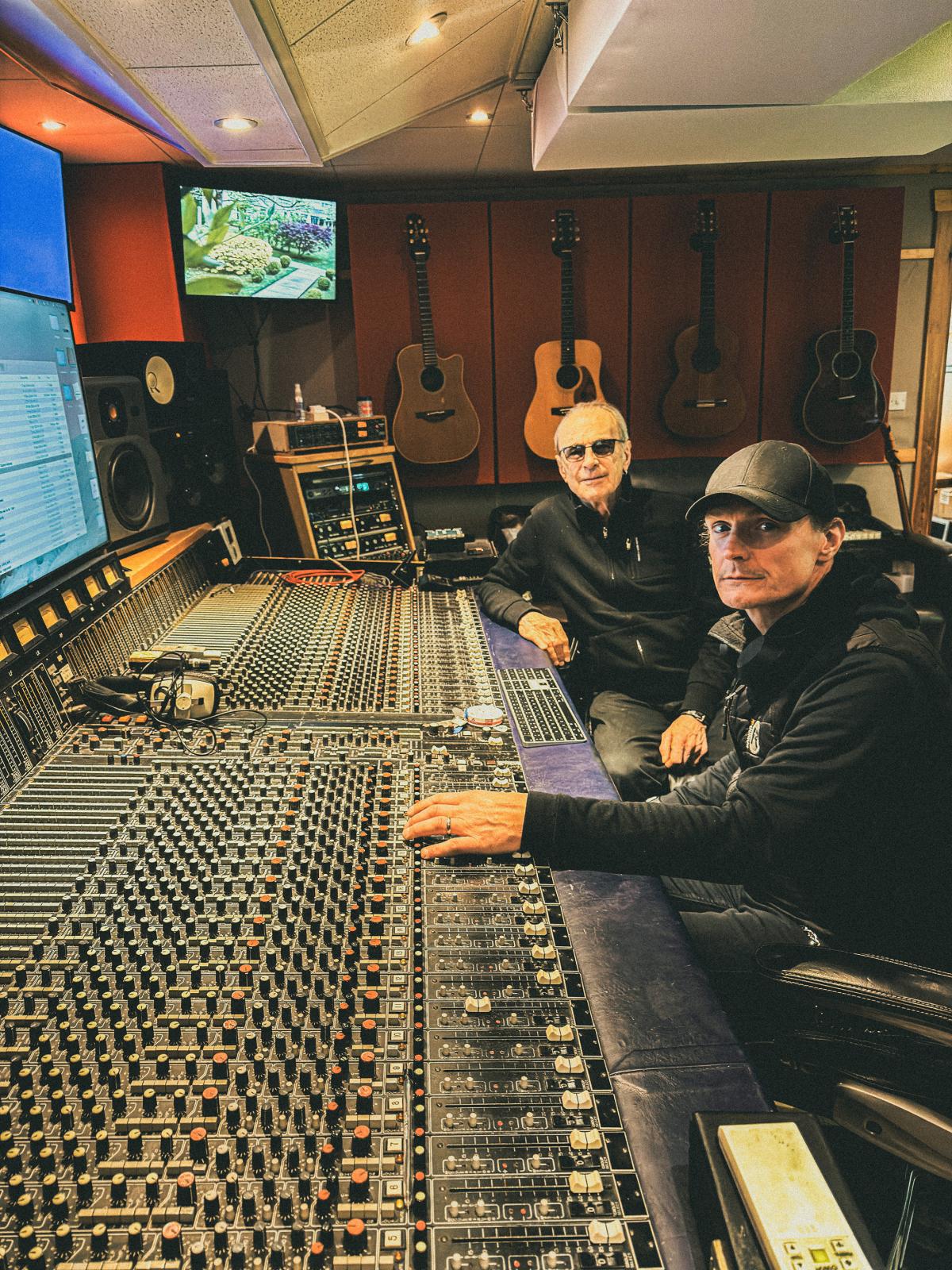
Purley, U.K., June 17, 2026 — In 1977, after Status Quo recorded their Rockin' All Over the World album on a Harrison 32c analog inline mixing console at a facility in Sweden, bandleader Francis Rossi vowed to install one in his own studio in Purley, South London. Nearly five decades later Rossi still lives in Purley, and his personal studio features a vintage Harrison 4032c together with new Harrison Audio 32Classic MS Mixstrips and 500 Series Comp modules, with which he’s recording his next album.
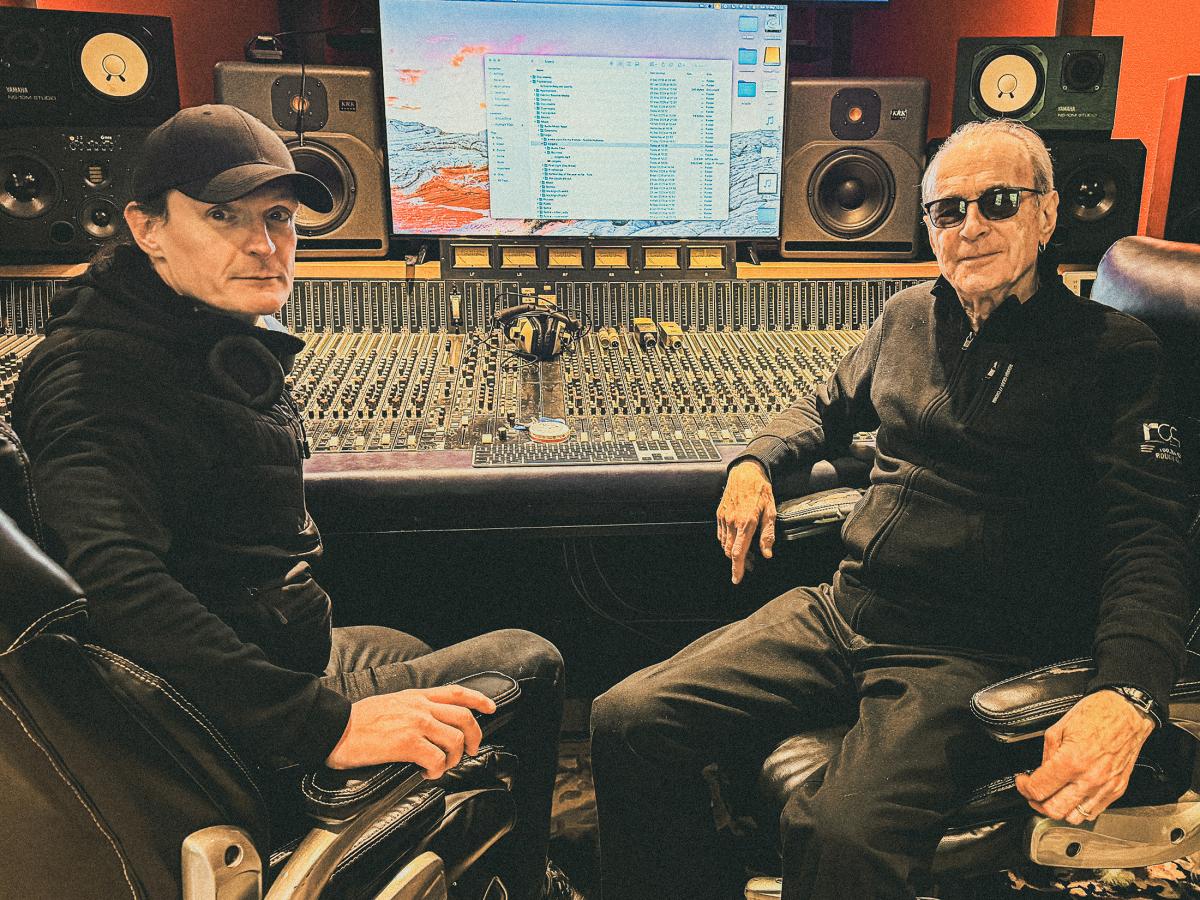
“We released an album on the 30th of January that did very well on the AOR charts in the U.K. and across Europe, and is his highest charting solo album,” says Andy Brook, Rossi’s right-hand man in the studio and on the road. Brook co-produced, recorded, mastered, engineered and played on the record, The Accidental, and co-wrote three tracks. He also joins Rossi onstage for “An Evening of Francis Rossi’s Songs from the Status Quo Songbook and More,” a two-man acoustic show that draws from a catalog of 100 singles and 33 albums, and over 60 U.K. chart hits, more than any other band. “On the back of that album we got straight into recording the next album,” Brook says, “and everything we've recorded for the new album thus far has been done on two of the 32Classic Mixstrips.”
“I used to hear engineers and people talking about the sound of the EQ,” recalls Rossi, who finally had a chance to experience a 32c at Studio Bohus in Sweden, where ABBA also recorded, when Status Quo recorded there in 1977. “That’s when I started to want to be more hands-on and learn a bit more about engineering, and the Harrison’s inline monitoring was sweet — I could follow the signal path.” Rossi later found a 24-input Harrison 32c that had previously been at a radio station and installed it at his studio. “When I got it, I was working with the EQ and I went, ‘Wow, now I see what they mean!’ It was really smooth and warm sounding.” Rossi, the only continuous member of Status Quo since the band formed in 1962, replaced that console about 20 years ago with a 4032c built in 1979 that was previously owned by Australian producer and arranger David Mackay.
When the 32Classic Mixstrips arrived, Brook compared the new rack-mount channel strips to the vintage console in Rossi’s studio, which is in a building behind his house. “I did a test and rotated the phase to see what was coming directly from the Channel Strip and from the desk itself, and it was quite amazing how similar they are,” he reports.
Having persuaded Rossi that the new units would offer better performance, and certainly a better signal-to-noise ratio, than the venerable 32c console, he says, “We've just got the two channel strips racked up on the side and everything's going through those. The EQ has always been the draw for Francis — and for me, since I started working with it — and I think Harrison has replicated that purposefully in these channel strips, that sweet, musical sound of the EQ. It’s that classic Harrison EQ.”
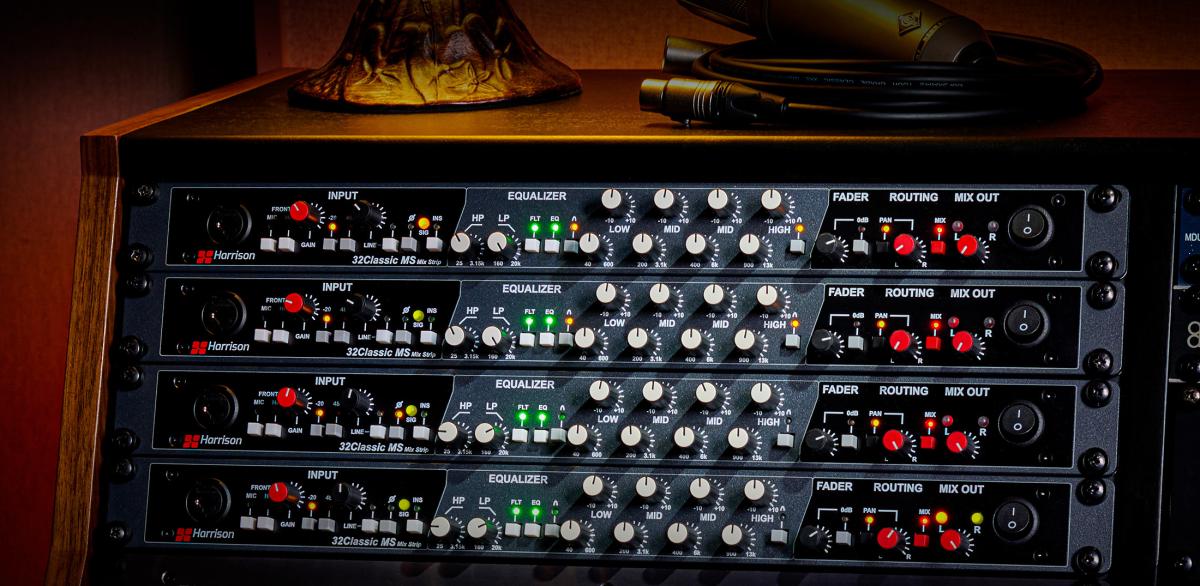
Brook is using the Mixstrips’ multiple input connections, comprising a front panel combo XLR/TRS jack (Mic/HiZ) input, separate rear panel mic and line inputs, plus insert send and return, to streamline his workflow, switching between selections on the front panel. For instance, one unit might have Rossi’s guitar on a line input while an AKG C414 microphone, Rossi’s favored vocal mic, is plugged into a mic input. “The Harrison channel strip is very flexible, because you've got four inputs on it, so you can have any number of devices connected up to make sure that there's no interruption in the creative flow,” he says.
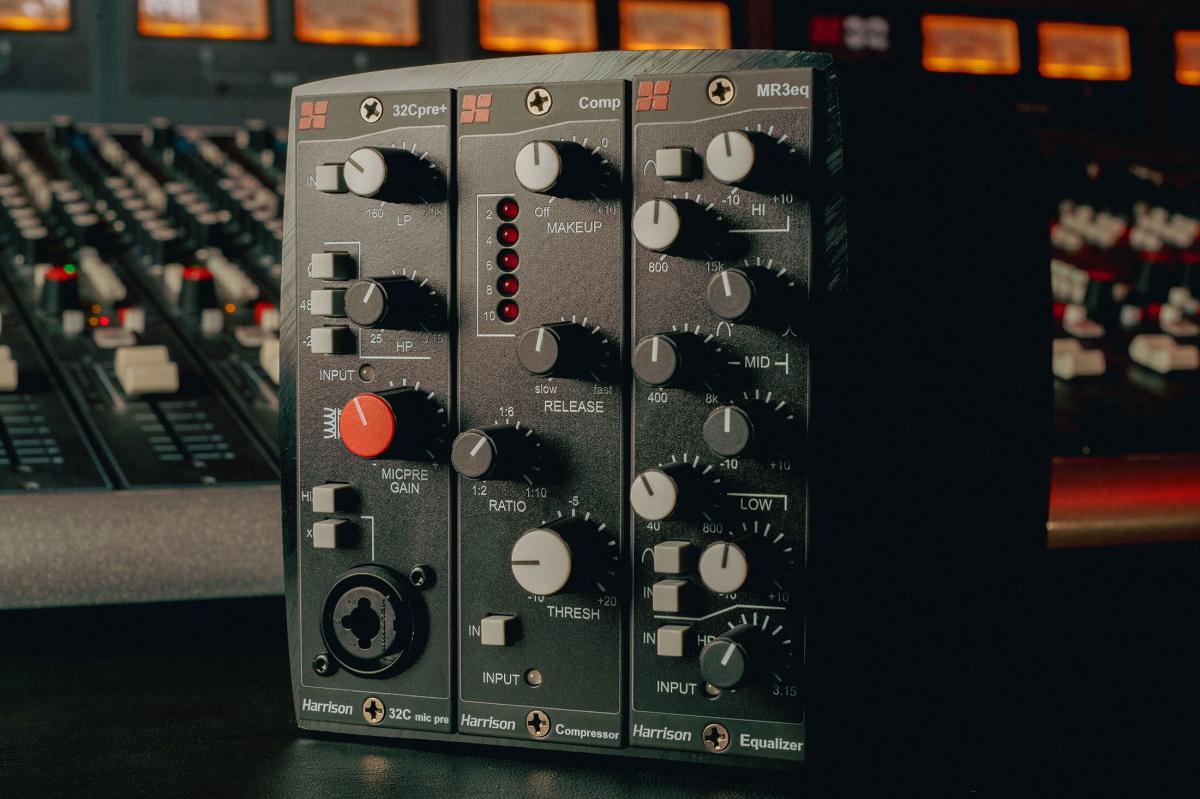
He has been using a Harrison 500 Series Comp compressor module, which is based on a feed-forward design, on the insert of each channel strip. “With our workflow we've got multiple things going into each of the channels, and I don't always want dynamic processing, so if I can deselect the compressor,” he comments, by switching the insert out on the front panel, “then it's a quick way to work,” Brook had not previously used a Harrison compressor, but says that he has been pleased with its performance. “It's touchy, and it crushes. I like that for big vocals — it's like smashing it with an 1176. It just ties in beautifully with the mixstrips.”
Rossi’s 4032c was used on many notable projects prior to arriving at his studio. The previous owner, David Mackay, worked in both music production and TV scoring and commercials, recording artists including the Bee Gees, The New Seekers, Cilla Black, Demis Roussos, Harry Nilsson, Dusty Springfield, Bonnie Tyler, Mickey Dolenz and others with the console. He also used the console to record the scores for such U.K. TV shows as the award-winning Auf Wiedersehen, Pet, As Time Goes By, Boon, Blott on the Landscape and Bread.
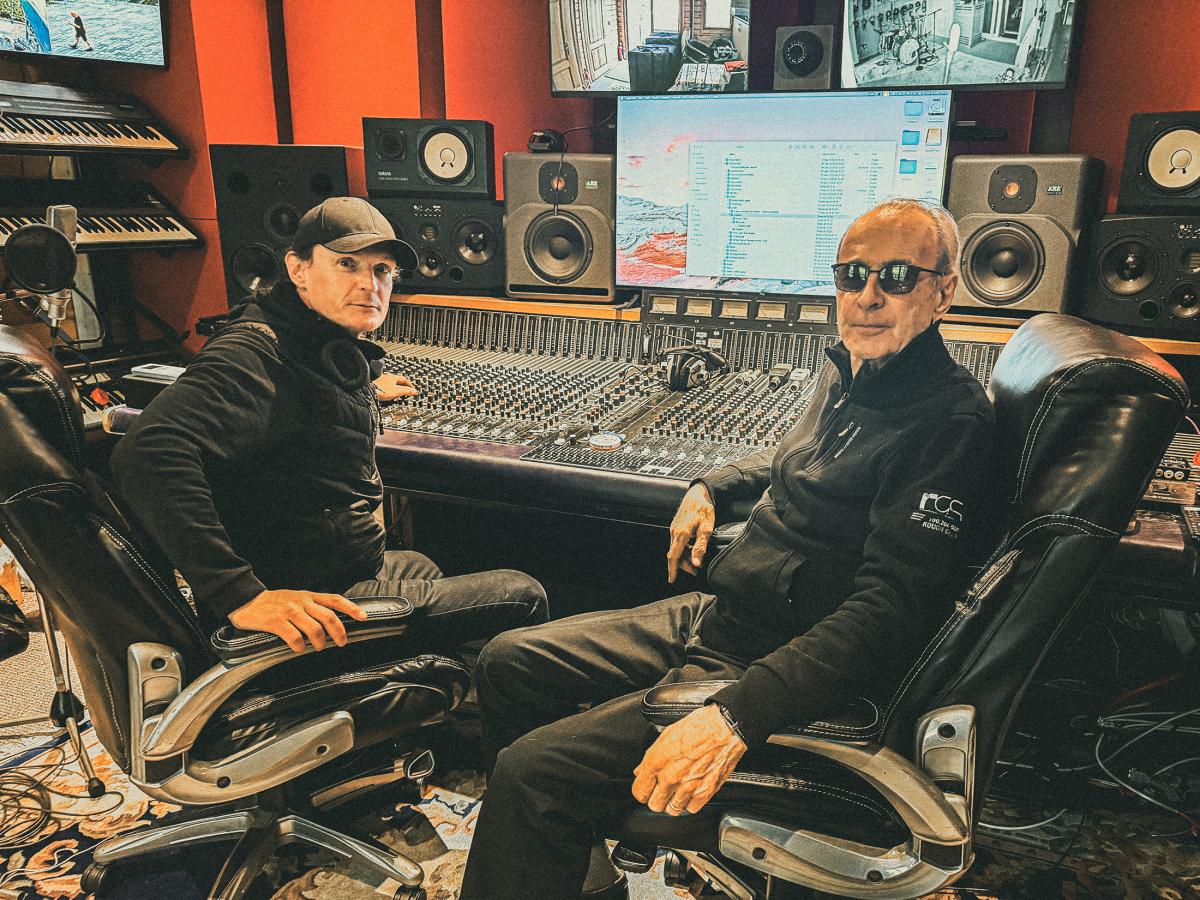
Rossi has produced all his recent projects on the 32c, including the country-flavored Rossi/Rickard duet album We Talk Too Much, a collaboration with vocalist Hannah Rickard, which topped the U.K. Country Album and U.K. Independent Album Breakers Charts in 2019. “That album was all done on the Harrison,” Brook says, and was my introduction to that desk in in a fully comprehensive working environment; I didn’t bring in any of my own tools.”
From his famed Fender Telecaster guitars to his Harrison mixing console, Rossi says he gets very attached to the brands that he likes. “I get very loyal, so I became very much a Harrison bloke, and I still am, and I still have this desk here. I believe I have the only one of these in this country,” he says. He’s not surprised that both his Harrison 32c consoles have been such workhorses. “Harrison always had that ‘Rolls-Royce effect — you knew the pieces were going to last.” As for the new Harrison Audio 32Classic MS Mixstrips, Rossi says: “They are as good as the original modules.”